A Reflected Journey
To move from Tennessee to Idaho, my dad joined me for a father-daughter road trip. Over the span of five days, we stopped at various National Parks and Monuments. On each stop I captivated the beauty of the landscape and wildlife with hopes to create something impactful in the future. I have now written personal narratives about my graduate school journey that blends with the images taken before this journey began.
Think of the photo as a foretelling image that would hint at my graduate school experience!
A Path Set Before Me
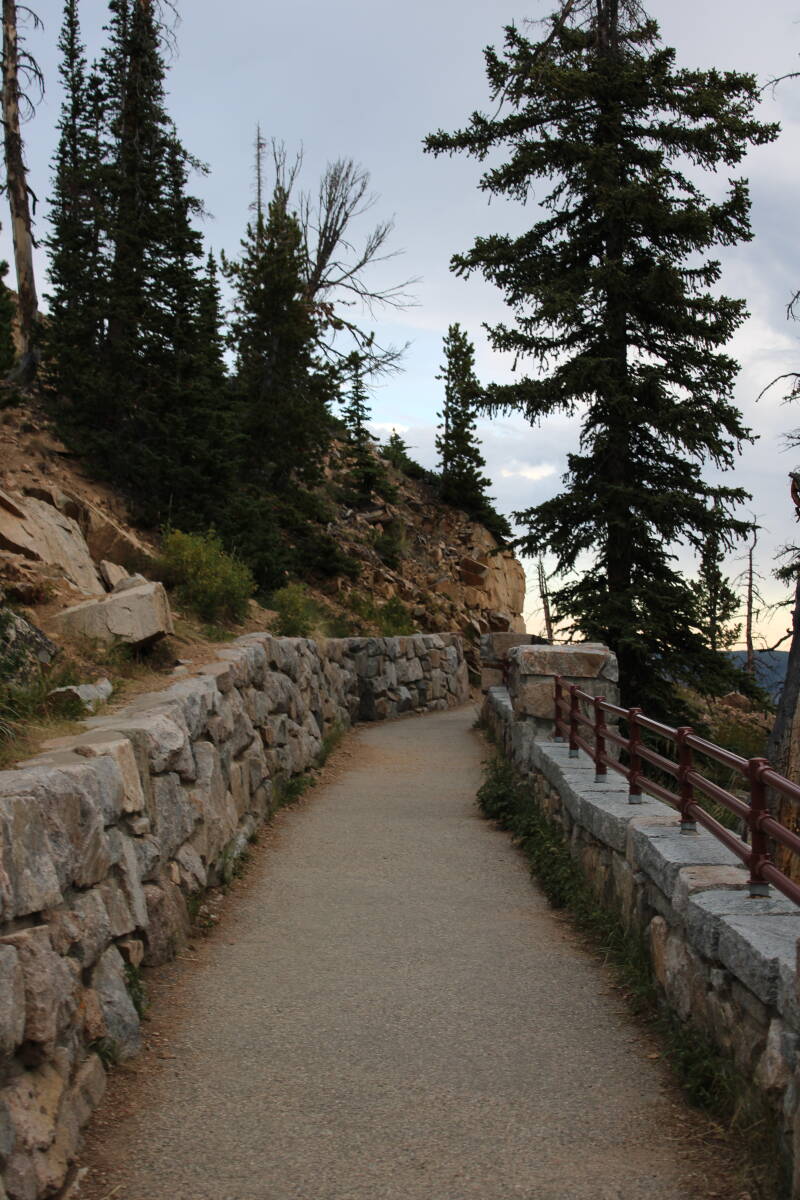
A paved trail winds between stone walls and dense conifer forest in the Sawtooth mountains outside of Yellowstone National Park.
My MOSS journey was path designed by God abruptly laid before me. I graduated from the University of Tennessee at Martin in May of 2025 and returned to Kentucky to work for the state’s wildlife agency as a conservation educator for the youth. This employment was to last into August and the unknown of what came next was lingering overhead. In late July, after a job interview with a private land organization in Alabama, I stumbled across a graduate school opportunity through the University of Idaho online. As I read the description of the experience, I envisioned myself reaching my last educational goal, which was to attend graduate school. Realizing the start date was less than a month away, I urgently wrote the application materials required while sending emails to ensure the program was still accepting applicants. A week later I was accepted into the McCall Outdoor Science School graduate program and in August I was driving to McCall, Idaho. I felt in my heart that this quick timeline was provided as a gift from God.
Turning back to Tennessee and changing my mind was not an option once I began driving across the country. With my dad in the passenger seat, we drove nearly 60 hours while on a five-day road trip. We had never had an adventure like this before, but along the way we stopped at five national parks and monuments to explore the West together before I moved away from the South for a year. We spoke about topics that we had never discussed before, enjoyed the beautiful views together, and bonded in a new way. My dad has always been my hero, but on this trip, I realized he was also my best friend. Once I arrived in Idaho, encouragement to move forward and face the unknown was amplified by my dad as I dropped him off at the airport in Boise before finishing the remainder of my drive to McCall. For the first time in five days, I was alone and reality had set in. I began questioning my decision but understood that I was strong enough to put one foot in front of the other while I traversed along the graduate school journey ahead of me. This was because of my dad’s great pep talk that he once again gave as he walked into the airport… “Don’t suck.” This has always been his way of saying “You are strong and you’ve got this, I love you”.
When I arrived in McCall, Idaho, I unloaded my car alone, shuffling all my belongings into drawers. I was to spend nearly a year here for graduate school – it’d be a place to live, but I was unsure whether it’d ever feel like a home. Quickly, unknowns began to fill each step as I stumbled upon unfamiliar people that filled the other seats within my graduate program. As I met my new peers and the faculty, I realized that for the first time in my life everyone that surrounded me was not like me.
I was the person in the group that spoke with a heavy accent and had a lack of understanding of the place and the culture that I moved into. People were honoring the land that was taken from indigenous tribes and were sharing their pronouns with the group when they greeted one another – unfamiliar things I had never witnessed before. Fear and anxiety churned in my chest, realizing this place would be a different experience than anything else I had faced before.
A month passed by and I became more aware of my surroundings and the people who consistently buzzed around me. I experienced homesickness – longing for my home and people back in Tennessee. The people and community in Idaho were different, and it taught me how much my upbringing in the South was a part of me. I often felt myself looking back but recognized my hips couldn’t pivot in the direction I wished to flee towards.
The butter scotched-scented Ponderosa Pines filled the void in my heart that missed the beautiful American Sycamores of Tennessee. The sun setting behind the towering mountains encasing the glacial lake painted a prettier picture outside my cabin window than the man-made reservoir lakes back home. As weeks turned to months, I noticed Idaho gradually making changes in my pace. Some experiences in the graduate program would send me on a brisk walk that would shake loose the anxiety that sometimes hovered – especially during an onslaught of new experiences
I was learning to be an outdoor educator, and something like the successful execution of an aquatic lesson to excited 12-year-olds would swell my confidence and affirm for me why I was here. The joy brought to a child’s face as they felt what it was like to submerge themselves into being a scientist and exploring the landscape was a an award received by my heart. Other experiences had the opposite effect. I struggled to enmesh myself into a community of people who had fundamentally different value systems than mine. My world view is rooted in faith, awe, and science… and I saw those last two things reiterated in the world around me – but the first one was glaringly absent. My foundational value of faith was longer mirrored - causing a part of me to grieve the blessing I had taken for granted when I resided in the South.
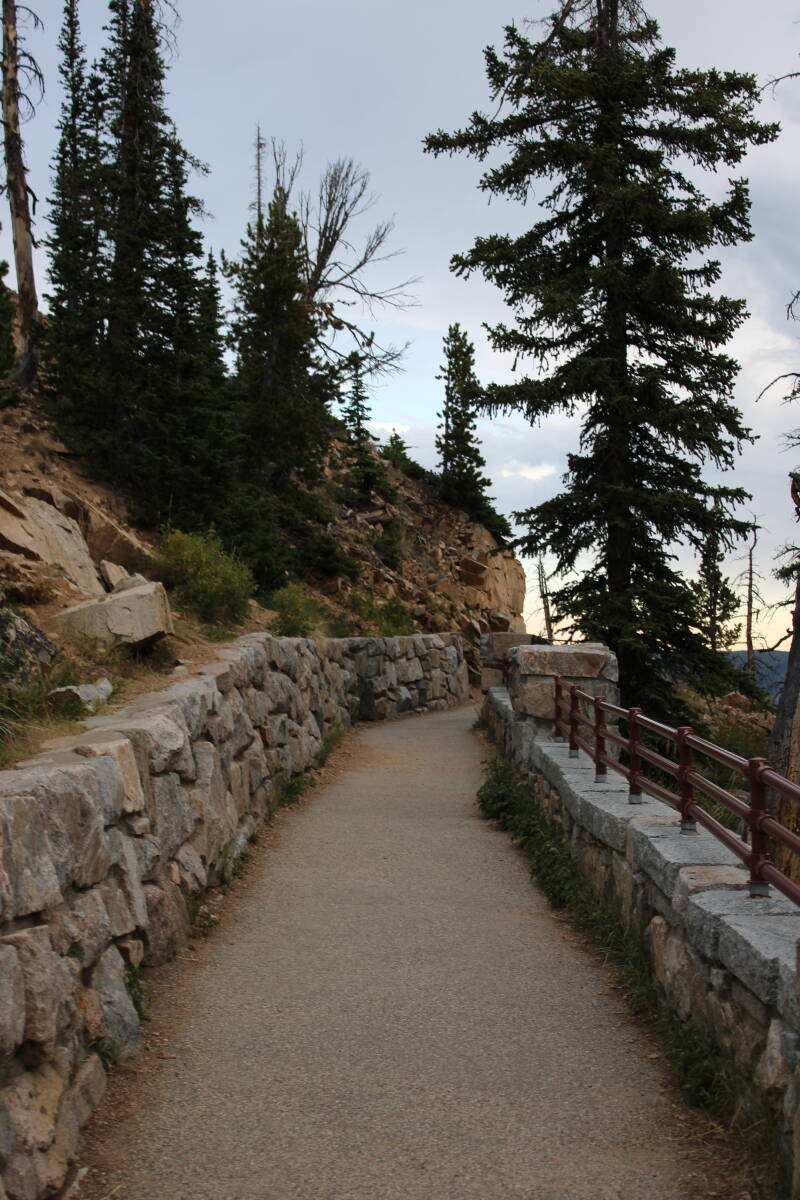
A paved trail winds between stone walls and dense conifer forest in the Sawtooth mountains outside of Yellowstone National Park.
Periodic trips home to Tennessee soothed me – but they also stalled my acclimation process to Idaho. My identity felt fractured. Midway through the school year, I settled into a feeling of steadiness and belonging. I had developed an understanding of the people that surrounded me. This awareness brought forth recognition of which parts of me would be accepted while keeping the parts of me that I was unsure of packed away. The feeling that I had established a seat within the community allowed my shoulders to drop from my ears.
Feelings of homesickness faded as I developed lifelong friendships. The people around me renewed my spirit and allowed me to crack a smile and enjoy the final months of path that lay before me.
I don’t think at any point I ran down the path of my graduate school journey, but as I reached the end, I didn’t find myself looking back anymore. I was hired for a job that would return me to the Southern culture and values I found myself longing for in Idaho – and that metaphorical ticket home carried me forward into the remaining months of graduate school.
Satisfaction is a feeling I was worried I would never feel about my time in McCall. As I am near the end of this path, however, I feel a deep sense of gratitude and appreciation for this place - satisfaction rooted in the experiences that I enjoyed, and in those that I cried through has put me exactly where God intended my journey to go.

A bison calf, estimated to be around 8 months of age, stands in a foggy meadow early in the morning at Yellowstone National Park.
Newness of Life
My time at MOSS was filled with newness. A new living style with new people. A new ecosystem to develop an understanding of – both with the human community, but also a completely new ecology. With trees as tall as skyscrapers and mountains all around – Idaho was entirely different from Tennessee.
New teaching and learning styles pushed me to be uncomfortable in the space I was in. I obtained a Bachelor of Science and had not taken any classes focused on philosophy or education as a career field. Learning about the various philosophies of education in a discussion-based class, in which everything is based on thoughts and opinions, was infuriating to me. I wanted to know the evidence for the thoughts and opinions for what my instructor and my peers were saying but this evidence was not provided. This forced me to discover my own personal philosophy of education, rooted in evidence and sources, that I aligned with more than those taught in class or discussed by my peers.
Classes rooted in focuses that I lack familiarity with pushed me to be fully engaged with what I was being taught. I have a deep interest in studying the natural world, but developing a personal philosophy of what education is to me was foreign. Rotating through a class cycle filled with topics that came naturally to me to topics that had new concepts with new styles of teaching was a new frustration. Through all of this, my determination to excel and persist never waned.
New, unfamiliar expectations for students from faculty were also hard. No exams or quizzes were given, and homework could be revised until the instructor deemed it was good work. The part of me that thrived on academic validation through the last 16 years of my education journey was stunned. How will people realize the effort it takes to do good work on the first try if they know they have multiple chances? How are people learning if they aren’t pushed to study the material after it is provided? It drove me crazy.
However, within this season of newness, I developed an ability to adapt and understand - like a bison calf learning to navigate the new world he faces. After the calf is weaned from the cow, the calves no longer rely on their mothers for protection, guidance, and learning. Instead, the calf shifts into an independent herd member, learning social cues and herd movement patterns. At this time, I related to the calf - developing my independence and personal identity through discussions led by my instructors and peers.
While navigating this new environment, I obtained a new quiver of skillsets that I will be able to take with me when I leave this place. Sharpening the tools I brought with me while making room for new tools that I will carry with me into the future is amongst one of my outcomes of this program. Writing and implementing educational curriculum that focuses on learning from the world around us instead of a textbook is amongst the skillset that will follow me into my new career.
As I prepare for a new season of life after this step in my education, I reflect on how all I settled into the new things and was able to successfully persist within the environment I landed in. Not only did I persist, but I was molded by my experiences and will be able to take the impacts of my program forward with me. I learned things about myself and about the future I wanted had I not been in this place. Newness is a gift, and not often is it given.
Unique Ecosystems
Yellowstone National Park is an ecosystem unlike anywhere else in the world – where a view of bison, steaming in the early hours of a cool summer morning, is now common after an unbelievably resilient recovery. The bison of Yellowstone reached a low of 25 individuals in the 1900’s. A captive breeding program, combined with anti-poaching efforts, allowed the population to recover and individuals to be released back into the wild. These days, Yellowstone is home more than 5,000 bison.
The more I learned about the peril and recovery of bison in Yellowstone, the more I saw a parallel with the field of natural resources. The career field is currently being rocked by a multitude of political and economic challenges that are causing uncertainty about what the future may look like for those of us studying for jobs in this realm.
McCall Outdoor Science School is not exempt from these pressures. But even as the job market feels more precarious, the program equips its grads for this career field in a number of different ways. Just as it does in real-life ecosystems, resiliency equals security. The academic elements of the program – alongside the personal and professional growth opportunities – have made this an irreplaceable experience for me.
Within the MOSS program, graduate students are called on to teach in-the-field lessons to school-age students from across Idaho. This process involves developing and implementing lesson plans that reflect the place and inspire students to submerge themselves in the natural world and learn from the environment, directly. These opportunities inspired me to develop my personal teaching practice to meet the needs of students while pushing them to excel in science discovery. On top of this, in-depth, personalized classroom instruction allowed me to learn new things that challenged my current knowledge.
From finding and articulating my personal belief in what education should be to learning the ecological processes of pine dominant forests and snow ecology – my professional career will benefit greatly after I leave this place. The hard work and effort that pushes this program to exist in the current state of uncertainty that consumes the current workforce is comparable to the management and efforts taken to keep ecosystems, such as Yellowstone, to remain.
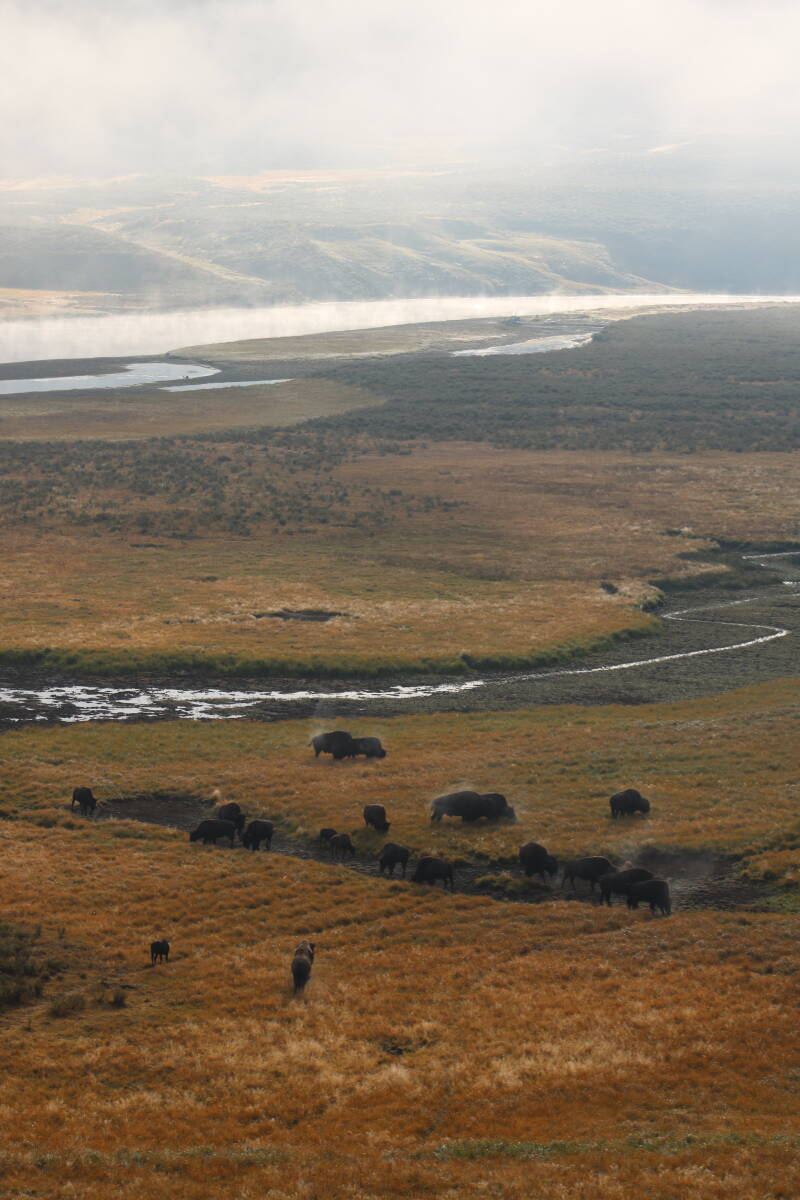
A herd of bison grazes in a foggy valley at Yellowstone National Park. Early-morning moisture settles across the grasslands and along a winding stream.
Falling Into Place
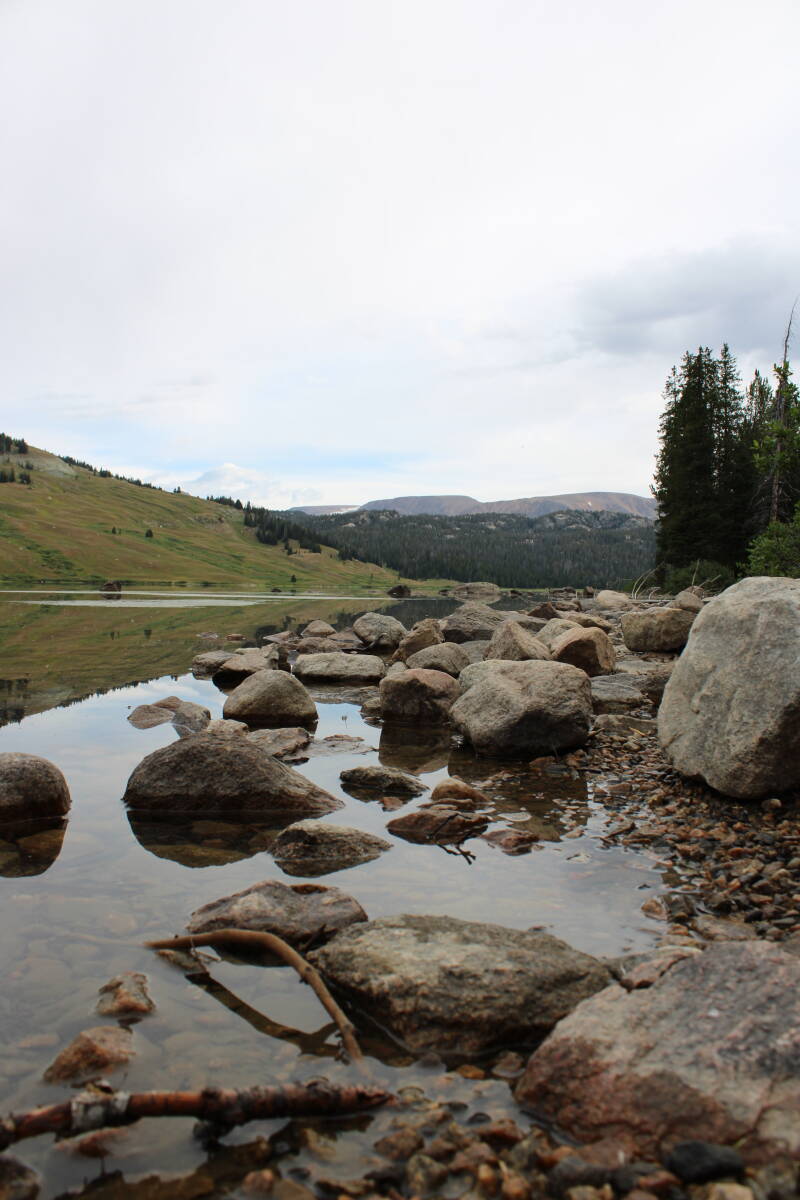
Rocks line the shoreline of a calm lake in Yellowstone National Park, where still water reflects surrounding hills and conifer forest.
The community at the McCall Field Campus is unique and the dynamic of the community changes year to year, as a new cohort of students is admitted to the one-year graduate program.
Each individual comes in with a unique life journey, familial culture, and personal interests and values. This year’s cohort created a beautiful mosaic – one never seen before and never will be seen again. This community would become the biggest challenge I would face at MOSS, providing the biggest opportunity of personal growth and understanding because of this.
Throughout my life, I have experienced moving through a wide range of communities in the South, always finding it easy to connect with people whose backgrounds differed from mine. Those early experiences taught me to feel comfortable in new places and convinced me that relocating across the country would be no different. But when I arrived in Idaho, that confidence slipped away, and I realized this move carried a kind of unfamiliar weight I hadn’t carried before.
Back home, love moved through everyday life the way water moves through a slow river – steady, familiar, shaped by generations of people showing up for another. Faith wasn’t announced; it flowed quietly beneath the surface, guiding the way they spoke to you and how people treated neighbors and strangers alike. There was a rhythm to it, a kind of inherited understanding that you look after people, that you honor where you came from, that you hold tight to the values passed down to you. I had found myself relating to the feeling of water meeting an unfamiliar shoreline – moving, adjusting, searching for the shape of the place.
The struggle, like water searching for a place to find stillness, was an experience that allowed me to recognize the value in the culture and values of the people I was once submerged in back in the South. The community in Idaho was made up of amazing people, and I didn’t understand my personal disconnect to this place that other people didn’t seem to struggle with. I had truly never been in this situation before. But I now recognize that a product of being a part of such a unique blend of people was the realization of what mattered so much to me. I didn’t realize how deeply that water shaped me until I stepped into a place where the current ran differently.
Finding My Way Back Into My Growing Season
Idaho experiences all four seasons. The weather I experienced in Idaho seemed familiar, at first. I arrived in the summer with excitement and falling into routine in my new life as fall settled in. Fall was brief, but notably less colorful than Tennessee – where oranges, red, and yellows become the palette of the landscape before the deciduous trees drop their leaves.
Hardship occurred once winter arrived. Idaho’s winter brought consistently low temperatures, inches of snow falling at a time, and a deep snowpack that covered the ground and walking paths for months. This was unfamiliar to me – and I struggled as often as I reveled in the newness of it. Moments of joy occurred when exploring the newness of the winter environment through science, teaching, and attempting winter sports. But after a few months, seasonal depression combined with an unexpected, heart shattering break up wrecked me – like a plant freezing from an unexpected cold snap it was not prepared for.
I had never encountered seasonal depression. The loss of daylight hours with the lack of color that I missed so much took a toll on my mind. The stress of finding a job and going through personal hardships made getting out of bed hard and daily activities became nothing more than trying to survive another day.
I knew spring was coming, but I was also worried spring wouldn’t change anything. I was scared something in my brain had changed and the switch would be harder to flip back to what was my normal self. As spring break creeped closer, my struggles worsened. I was operating on auto-pilot – going through the daily movements with a heavy heart and a mind that was turning against me. I had lost my light. Each night, as my roommate was sound asleep, I found myself restless, staring at my wall as tears fell silently, praying to fall asleep to escape the pain for a few short hours. I would wake to the realization such an escape was only temporary - forced to continue living in a heartache I never expected. My source of solace during this time was knowing that I was flying home for break to spend much needed time with my family.
As soon as I returned home, I felt my flower return– a relief, knowing that I persevered through the hardships of winter and would return to school with fresh, pretty petals. Time with my family and friends in Tennessee strengthened my root system, allowing me to tap into my own resources – the foundation of who I am. I returned to campus in late March as a strong, supported flower. Winter, too, had dissipated. Green growth dotted campus. The landscape was coming alive after winter, and I felt that within me as well.
As my time at school is near the last of the four seasons I would experience in Idaho, I am happy to be a beautiful flower that reminds me that no matter what I endure, I will return to my normal self - with a flower to show for it.
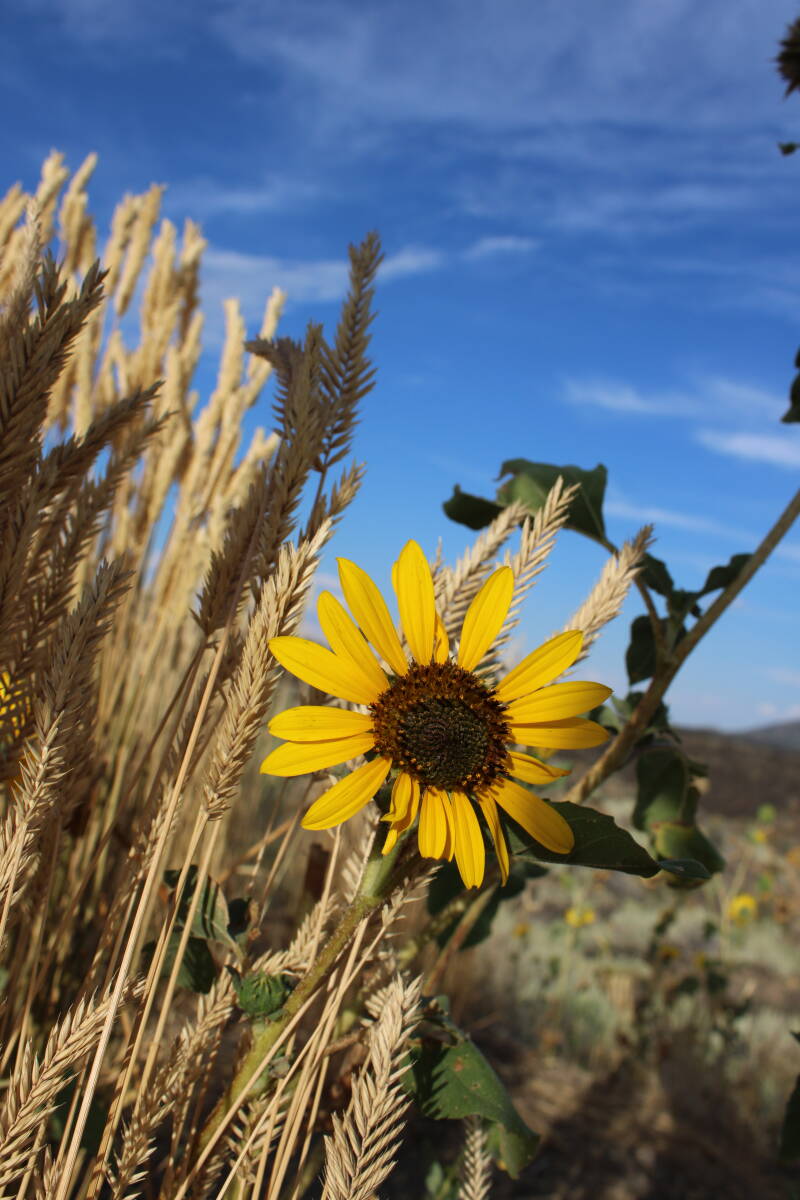
A flower grows among dry grasses at Craters of the Moon National monument, where hardy plant species take root in the park’s volcanic landscape.
Formation
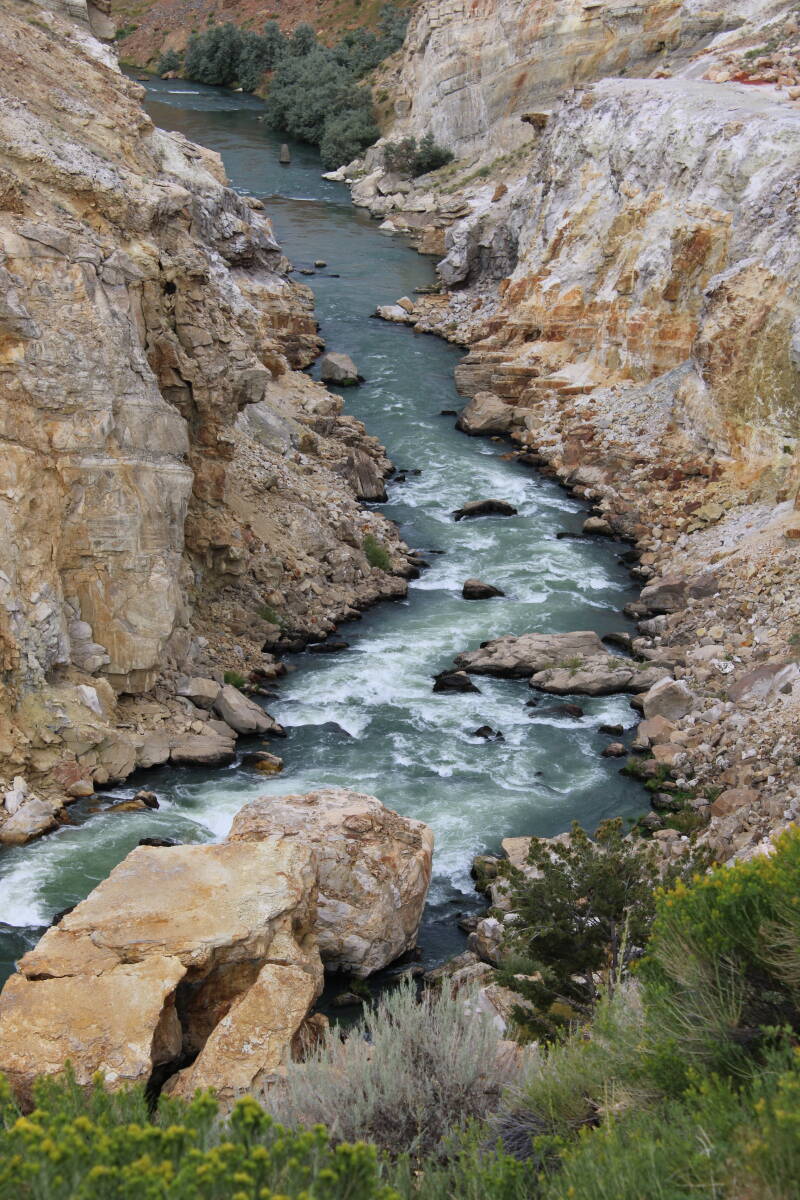
Whitewater moves through a steep rocky channel at Hell’s Canyon, where fast-flowing water continues to erode and reshape the canyon walls.
Water sustains all life on Earth, and in my first year of graduate school, I learned how much it could my life, too. Snowmelt, rainwater, and groundwater gather in rivers the way expectations, unfamiliar landscapes, and new versions of myself gathered when I moved across the country. Each input changed the flow, the chemistry, the direction – in the river and in me. Availability determines what survives and what withers, and I felt that truth more sharply than ever before.
In the fall, the river slows just enough to gather what it needs. Sediment settles – silt, gravel, even boulders – each piece carried from somewhere else, each one altering the riverbed it lands on. I arrived in Idaho the same way: a piece of sediment from Tennessee, shaped by Southern faith-rooted warmth, community, and tradition. I didn’t yet know how those parts of me would settle here, or how much of myself would shift as I tried to find where I fit in this new canyon of expectations.
Winter brings the river to a kind of stillness. Flow tightens, ice forms along the edges, and movement pauses. But beneath the quiet, freeze-thaw cycles crack rock, creating new sediment that will break free when the water rises again. My winter felt like that too. On the surface, I looked steady, but internally, I was fracturing in small, private ways. The isolation, the unfamiliar culture, the sharpness of my own thoughts – all of it pressed against me until parts of me I thought were solid began to split. I didn’t know it then, but those cracks were creating the material I would eventually rebuild with.
Spring is never gentle in a canyon river. Snowmelt surges, water turns opaque with suspended particles, and the current tears at the banks, pulling trees and stones into motion. It is messy, loud, and powerful – a force that rearranges the landscape overnight. My spring was no different. Everything I had held still all winter finally broke loose. The loneliness, the self-doubt, the ache of a painful breakup, the meanness of my own inner voice – all of it rushed forward at once. It felt like a personal flash flood, the kind that scours a riverbed down to bedrock. It was destructive, yes, but it also revealed what was underneath. As the river finds its rhythm again, pools form and life begins again in the spaces carved by chaos.
The river in the canyon didn’t just carry water – it carried the mountain itself, grain by grain, carving a path through stone that once seemed immovable. And in its movement, I recognized my own formation – the way pressure, stillness, rupture, and renewal had carved me into someone new, someone shaped by both the place I came from and the place I was now residing in.
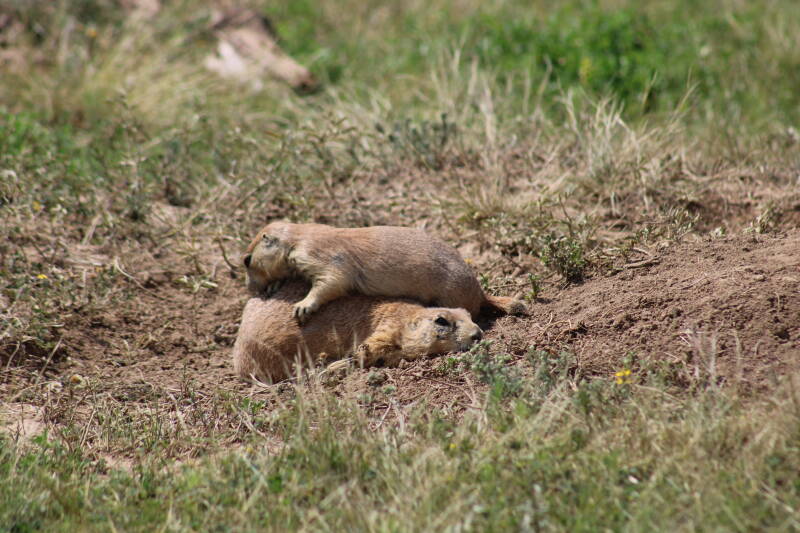
Three prairie dogs gather near a burrow at Devil’s Tower National Monument, part of the park’s active black-tailed prairie dog town.
Finding My People
Over time I developed a sense of community at MOSS. I formed lifelong friendships with individuals through the things we had in common. Nobody else in the program was from Tennessee, or even the Southeast, but we bonded over how our different life experiences had shaped us. We were able to share our stress, awareness, and struggles with one another as we lived through graduate school together. The community-living lifestyle that is known to be part of the MOSS experience reminds me of prairie dog “towns.”
Prairie dogs are ground squirrels that live in highly organized social communities. Each town is organized by coteries, which are family groups that include one dominant male, several females, and their offspring. Towns can range from a few dozen individuals to thousands, depending on the health of the habitat. Prairie dogs support one another, often sharing resources to make sure the needs of the coterie are being met. They also communicate constantly. The group remains vigilant for possible predators, ensuring the safety of the whole.
Living, studying, and teaching among my graduate school peers pushed our community to closeness. Reading small cues that could signal abnormal behavior that allowed us to support one another, even when some of the details were unknown.
The first few days after my breakup, which happened suddenly and unexpectedly, I was in survival mode. My three closest friends knew what had happened, but the rest of the cohort was unaware. My zombie-like behavior was a warning signal to my classmates that something drastic had happened. Without questions or pestering, my classmates showed up for me - kind handwritten notes, a cold can of Diet Coke, hugs, and silent understanding.
Prairie dogs live in open prairie, often exposed to predators and environmental factors that they remain resilient to. Weather conditions and seasonal changes drive their physical activity, social interactions, and behavior. Diseases can decimate prairie dog towns. The sylvatic plague is a flea-borne disease that can quickly spread throughout their community and kill an entire colony within days. The continuation of this species is an ecological example of perseverance. Graduate school is a high-pressure environment, often pushing students to become exposed to new concepts and ways of thinking, complex assignments and various due dates, while still having to sustain their personal struggles that life provides. I remained resilient through some of the hardest times of my life due to the support of my friends that MOSS provided me with.
The View
I was standing at the overlook alongside the “Highway to the Sky” at Rocky Mountain National Park as I took this photo. I felt the weight of the landscape settle into me as reality set in that I was moving across the country and everything that was familiar to me. The mountains stretched across the horizon – jagged, ancient, and unapologetically present. Their story began more than 70 million years ago, when the Farallon Plate dove beneath the North American Plate at an unusually shallow angle. That rare collision didn’t just scrape the surface; it shoved entire blocks of crust upward, folding and fracturing the land until the Rockies rose from the interior of the continent. They were born from pressure, uplift, and deep, unseen forces.
As I look back at this photograph, I realize how a similar era of forceful, abrupt change was on my own personal horizon – though I didn’t know it at the time. My graduate school journey started with a sudden shift – much like the tectonic forces that pushed these mountains skyward.
I arrived in Idaho with excitement and a sense of adventure, but the pressures of grad school built quickly. New expectations, people, landscapes, and versions of myself collided beneath the surface. I felt the strain of unfamiliarity, the grinding of old habits against new demands. Like the crust beneath the Rockies, I bent before I learned how to rise.
The Rockies didn’t form in a single event. They rose in pulses, with long pauses between moments of dramatic change. My year followed the same pattern. Some weeks pushed me upwards with confidence while other weeks felt like erosion, wearing me down grain by grain. But erosion, too, is a powerful force. It shapes by erasure. I shed old parts of myself as new elements were added to my nature.
Looking back at this photo from my road trip West, I now realize that my life journey mirrored the landscape before me. I didn’t rise quickly or cleanly. I rose through pressure, folding, and slow work of becoming. I rose because something deep within me refused to remain flat and unchallenged.
Now, as I near the end of this season of my life, I see myself the way I see the Rockies – still changing, still weathering, still rising – possibly in a lull of activity, but always ready for the next cataclysmic shift. My experiences have carved me into someone stronger, more grounded, and more aware of the forces that shape me. Like the mountains, I carry the story of uplift in my bones. And like them, I know I will continue to rise.
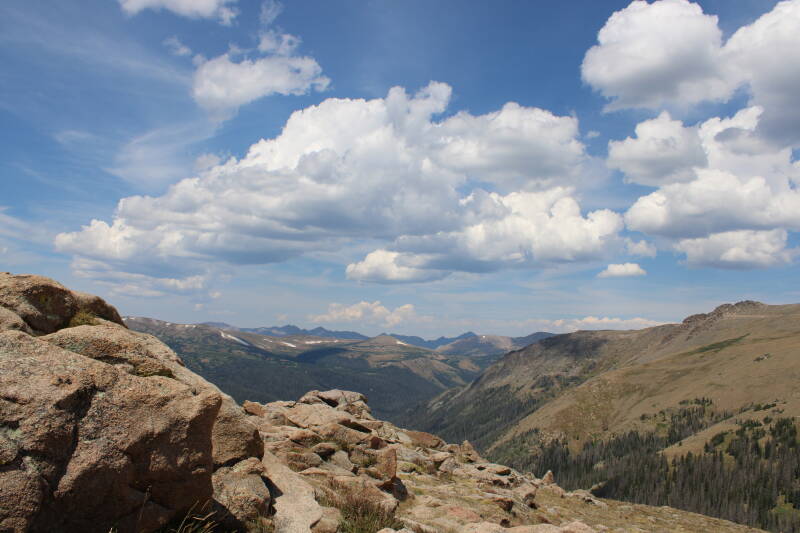
Mountains and forested valleys stretch across the landscape at Rocky Mountain National Park, where high-elevation terrain supports a mix of alpine and sub-alpine ecosystems.
Create Your Own Website With Webador